
ALL ABOARD CAROLINAS
From the Cab
AAC’s blog and newsletter hub for passenger rail updates, meeting recaps, commentary, and stories from across North Carolina and South Carolina.
Monthly
newsletter posts
Timely
rail updates
Local
chapter highlights
Archive
past issues
Follow passenger rail updates, meeting recaps, chapter news, and commentary from across North Carolina and South Carolina.
WHAT YOU WILL FIND HERE
This page serves as AAC’s blog and newsletter hub, making it easy to keep up with current issues, recent posts, and new updates as they are published.
ATTEND WITH CONFIDENCE
Explore recent stories, featured updates, and past issues to follow how passenger rail conversations are evolving across the Carolinas.
CATCH UP LATER
SOUTH CAROLINA RAIL PLAN RECOMMENDS TWO CORRIDOR ID STUDIES FOR THE PALMETTO STATE
Charlotte-Columbia and Columbia-Raleigh
The recently completed South Carolina Rail plan recommends two Federal Corridor ID studies be conducted by the South Carolina Department of Transportation for new inter-city rail passenger services. One study for Columbia to Charlotte would provide conceptual level capital and operating costs, and a range of ridership and revenue projections associated with new service connecting Columbia with Charlotte. The second study for Columbia to Raleigh would use the same parameters associated with new service connecting Columbia with Raleigh. This study would mesh well with the ongoing development of the Richmond to Raleigh higher speed rail project by North Carolina in cooperation with Virginia. The studies could be applied for by the Council of Governments if SC DOT shows no interest in pursuing them. The next round of national corridor study awards are expected late in 2025.
While the Federal Railroad Administration's Amtrak Long Distance study has been basically completed, the plan suggests continued monitoring and cooperation in the event of possible alterations to the study results. 15 Amtrak distance routes were selected, but the Carolinas gained no new additional long distance services. CAPT had pushed for a Midwest to Carolinas service that might split in Asheville serving Columbia and Charleston, and Charlotte and Wilmington. 2 Also recommended is a focus on the Charlotte-to-Atlanta High Speed Rail Corridor plan now continuing under the direction of the North Carolina Department of Transportation and the Federal Railroad Administration.
The proposed corridor would provide new service on a new high-speed rail alignment between Charlotte, NC, and Atlanta, GA, with potential intermediate stops including Greenville-Spartanburg International Airport in South Carolina and Athens, GA, then serving a downtown Atlanta station and terminating at Atlanta’s Hartsfield-Jackson International Airport, the world’s busiest airport. The projected May 2026 Atlanta-Charlotte Tier 2 Environmental Impact Statement is a follow-up to FRA’s 2021 Record of Decision on the Tier 1 Final EIS. The Tier 2 EIS includes an examination of propulsion technology, more detailed information about alignment, station locations, airport interchanges, and plans for service development.
It should be noted that expansion of new rail passenger services in South Carolina could involve use of freeway right of way which has been done in Florida and Nevada for Brightline projects. Brightline has already expressed interest in the Charlotte-Atlanta corridor. Legislation was proposed in the last session of the South Carolina General Assembly on how the state might be involved and benefit from use of freeway right of way for rail operations."
Service from Ashevilleto Groveston/Old Fort Loops Undetermined
RAIL SERVICE FROM ASHEVILLE TO TENNESSEE STATE LINE TO BE RESTORED
BY APRIL OR MAY 2025
Restoring washed-out tracks (see pictures on page 13) in Western North Carolina is now expected to take a little longer than earlier predicted. Norfolk Southern is predicting restoration of its Asheville mainline west to the Tennessee state line will not return to full service until perhaps April or May. The portion of the mainline in Tennessee has been restored for local service. Restoration of Asheville to Grovestone near the west end of the Old Fort Loops is undetermined at present. Restoration of the Loops is estimated at 60 million dollars, and NS has requested 20 million dollars from the state to help with that work. The General Assembly is expected to consider that in addition to other Western North Carolina hurricane relief in its session beginning in January.
CSX indicates its restoration of its mainline north of Marion to Erwin, TN may not happen until late in 2025. Sections of the mainline in Tennessee, and around Marion have been restored for local service. 3 The Great Smoky Mountains Railroad (GSMRR) and Blue Ridge Southern Railroad (BRS) are expected to request grants from the North Carolina Railroad Disaster Relief Program and from the North Carolina General Assembly to help fully restore their lines. BRS is completely out of service due to lack of connectivity to Norfolk Southern in Asheville. BRS and GSMRR are exploring trackage rights for GSMRR passenger excursions between Dillsboro and Sylva.
The abandonment of Norfolk Southern’s Saluda grade line was given final federal approval on December 20th. The environmental coalition working to secure the 31 miles of track for trail purposes has until early August of 2025 to complete the transaction. The NC General Assembly in December released 12 million dollars for the North Carolina purchase in December. 15 million dollars for the South Carolina portion was approved earlier. The North Carolina money is contingent upon exploring rail plus trail north from Saluda to the connection with the Blue Ridge Southern at Zirconium near East Flat Rock. NC State Representative Jake Johnson, sponsor of the legislation, is hopeful a rail component will survive north of Saluda.
Below are two outside media accounts of passenger rail recovery efforts in Western North Carolina, first by Citizens Working to Bring Passenger Rail Back to Western North Carolina (Waiting for the Train) and WSOCTV.com (Channel 9, Charlotte, NC).
Condolences to Patti Frierson,
Her Children, Sarah and Andrew, along with their family members
CAPT’s South Carolina Vice-President, Jim Frierson, passed away Thursday morning (December 26) in Columbia, SC. He was also the South Carolina representative on the (RPA) Rail Passengers Association Council. Jim’s obituary follows. Thoughts and prayers would be welcomed for Jim's wife, Patti, and the family.
U.S. NAVY VET, PASSENGER RAIL ADVOCATE, PASSES AWAY SURROUNDED BY FAMILY
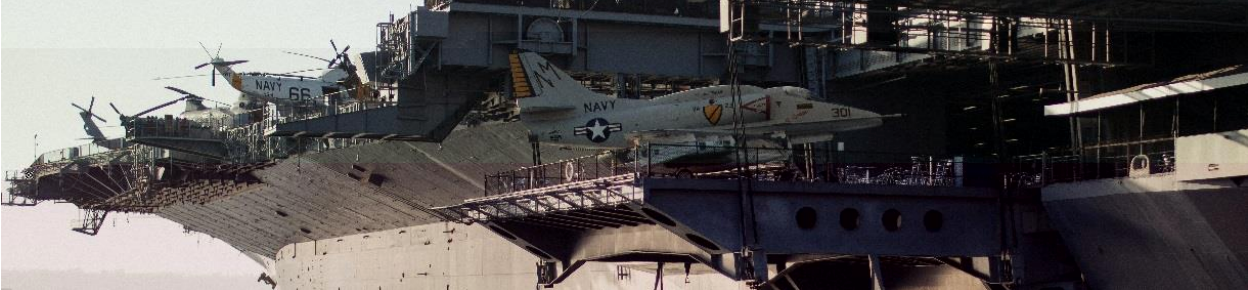
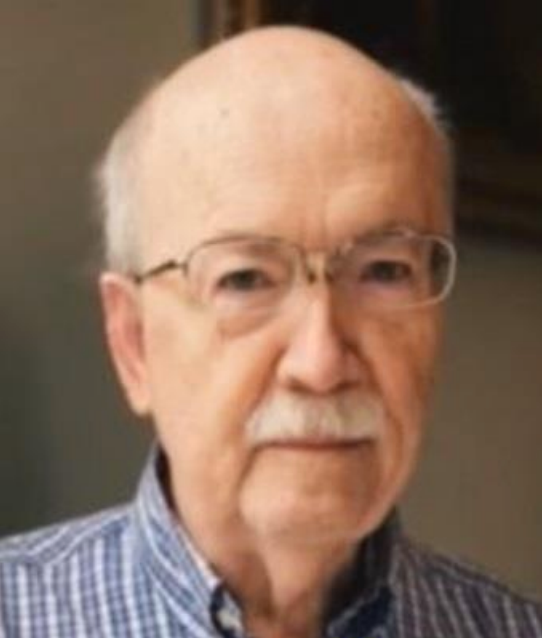
Chief Petty Office (CPO) James “Jim” Manton Frierson, 78, of Columbia, South Carolina, passed away at home surrounded by his family on December 26, 2024. He was born on January 27, 1946, in Richmond, Virginia, to the late LTC Manton Rodgers Frierson Jr. and Lillian (Wingfield) Frierson.
Jim proudly served in the U.S. Navy for 35 years, including active duty on the USS MacDonough (DLG-8) from 1967 to 1968. After active duty, he joined the reserve service, drilling at various centers, including Columbia, SC, Charleston, SC, and Miami, FL. In 1988, he completed a legal clerk training course at the Naval Justice School and transferred to the reserve staff of the Commander, Naval Reserve Readiness Command, Region Seven, in 1990. He last transferred in 1992 to the Naval Reserve Center, Columbia, SC, where he drilled for nine years as a voluntary training unit member (legal service) before retiring as a legalman chief petty officer in October 2001.
Jim grew up in the Presbyterian Church and was a strong believer in Jesus Christ. He attended Christ Covenant Church, PCA, in Columbia, SC, and enjoyed praying for others. He graduated from the University of South Carolina with a bachelor’s degree in geography and worked as a program coordinator for the Mass Transit Office of the South Carolina Department of Transportation for 30 years. He was an active life member of the National Naval Enlisted Reserve Association (NERA) where he served as Secretary. He was President of the local Mid-Carolina NERA 5 Chapter, Secretary of the Chief’s mess at the Naval Reserve Center in Columbia, SC, and Vice President of the Carolinas Association for Passenger Trains (CAPT) All Aboard in the Carolinas. His hobbies included model trains, Civil War and Revolutionary War reenacting, art and drafting, reading, genealogical and archaeological research, and spending time with his wife and children.
He is survived by his wife of 45 years, Patricia A. Frierson; his son, Andrew G. Frierson (Sarah Jo) and his daughter, Sarah E. Frierson; his sister, Eileen F. Coogler (Lucius); his brothers, Dr. Manton R. Frierson, III (Mari), Rev. Dr. David M. Frierson (Suzette), Edward W. Frierson, and Bryan G. Frierson (Amy). He was preceded in death by his parents.
The family will receive friends at Thompson Funeral Home, 845 Leesburg Road, Columbia, SC 29209, on January 2, 2025, from 5 to 7 p.m. Funeral services will be at Christ Covenant Church PCA, 3100 Covenant Road, Columbia, SC, 29204, on January 3, 2025, at 11:00 a.m. Burial with full military honors will follow in Greenlawn Memorial Serenity Gardens. Officiating will be his brother, Rev. Dr. David M. Frierson, and Pastor Justin McGuire.
Memorials may be made to Christ Covenant Church PCA.
FRIERSON RECIPIENT OF INAUGURAL CAPT OUTSTANDING SERVICE AWARD
“In thinking back on all you have meant to CAPT over the years, we intend to honor you with a special award,” wrote President Wheeler to Jim and Patti Frierson on Christmas Eve. “The CAPT Outstanding Service Award will recognize your special service on behalf of the association,” he continued.
“In subsequent years, the award will be presented annually to a person in either state (North or South Carolina) for recognized service and will carry the name of the James M. Frierson Outstanding Service Award, Wheeler concluded. Patti Frierson was able to share this news with Jim on Christmas Day before his passing shortly after 1:30 a.m. on December 26th .
“He was very honored that you want to recognize his years of service to the CAPT family by having this award carry his name,” Mrs. Frierson said. “I also shared this (news) with his family (Andrew, our son, and Sarah, our daughter). They agree that this is a special honor to Jim, and they thank you for this recognition,” Jim’s wife added.
IT’S MEMBERSHIP RENEWAL TIME FOR CAPT MEMBERS
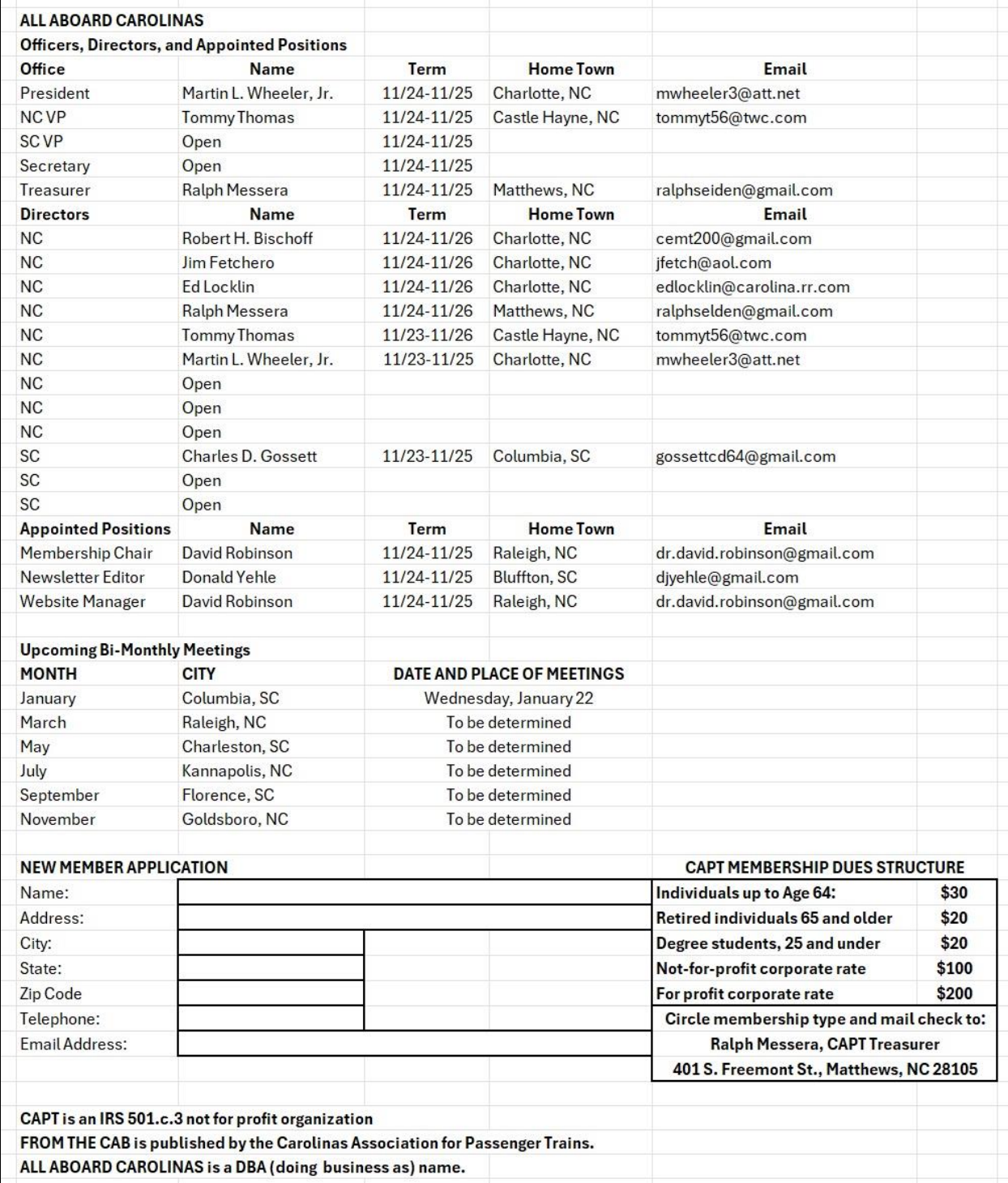
The Carolinas Association for Passenger Trains (CAPT) is asking its members to renew their membership as early in 2025 as possible. Membership questions should be addressed to Ralph Messera, Treasurer, at ralphselden@gmail.com, or David Robinson, Membership Chair, at dr.david.robinson@gmail.com. Members also are asked to assist in the ongoing membership drive by making a phone call, and sharing this newsletter with friends and business associates, and reminding people of the need for a vibrant passenger rail system in the Carolinas.
CAPT DUES INCREASE FOR FIRST TIME IN MORE THAN TEN YEARS
A new CAPT membership dues structure is effective January 1, 2025, to offset rising costs of supporting the running of the all-volunteer organization (e.g., postage, copying, banking, etc.) The CAPT board of directors approved the following modest dues changes at its November 2024 meeting.
Individuals up to age 64 -- $30
Retired individuals 65 years and older -- $20
Students enrolled in degree or certificate program, no older than 25 -- $20
Not-for-profit Corporations -- $100
For-profit Corporations -- $200.
SIX CAPT BOARD MEETINGS PLANNED FOR 2025
Circle Wednesday, January 22, on your calendars. Board members, all CAPT members, and invited guests are invited to the organization’s first meeting of 2025 in Columbia. Further details will be emailed to all CAPT members. Other scheduled 2025 meetings are in Raleigh (March); Charleston (May); Kannapolis (July); Florence (September), and Goldsboro (November). “The board decided to wait until closer to each meeting before assigning a definite date, since some meetings may involve government planners (i.e. Brian Nadnoly, project manager for the Charlotte Gateway Station and Red Line Commuter Rail met with the CAPT board at its November 21 meeting),” President Wheeler said. “Meetings will normally be close to the third Saturday of each month,” he added.
WHEELER ELECTED TO RAIL USERS’ NETWORK BOARD CAPT
President Martin Wheeler is a newly elected member of the Rail Users’ Network (RUN). Other board members are Richard Rudolph, chair, Northampton, Massachusetts, NARP, Trainriders Northeast, Maine Rail Group; Andrew Albert, vice chair, New York, New York, chairman, New York City Transit Riders Council, First Vice-Chair, Permanent Citizens Advisory Committee to the MTA, MTA Board Member; Chuck Bode, membership secretary, Philadelphia, Pennsylvania, Tri-State Citizens’ Council on Transportation; and David Peter Alan, Esq., South Orange, New Jersey, The Lackawanna Coalition.
The 11-person board also includes Joshua Coran, Seattle, Washington, Talgo Inc.; Clark Johnson, Madison, Wisconsin, All Aboard Wisconsin; Dennis Kirkpatrick, Boston, Massachusetts; JW Madison, Albuquerque, New Mexico, Rails, Inc.; Andy Sharpe, Philadelphia, Pennsylvania, Septa; Phil Streby, Peru, Indiana, Indiana Passenger Rail Alliance, and Brian Yanity, Fullerton, California, RailPAC California.
An advocacy organization, RUN is working to help secure an interconnected system of rail services that passengers will use with pride. “RUN forms a strong, unified voice for intercity and regional rail passenger interests,” according to its website.
Wheeler was elected to the RUN board on Saturday, December 7, during the organization’s annual meeting at the Metropolitan Transit Authority (MTA) headquarters in New York City.
As mentioned in the November-December issue of FROM THE CAB, Troy Creasy, NC DOT’s Rail Division’s S-Line Project Manager, spoke at the RUN board meeting December 7 on the S-Line project and expansion of passenger rail service from Raleigh to Wake Forest and eventually to Richmond, Virginia.
INDIANA RAIL ALLIANCE PRESIDENT GIVES PRESENTATION TO HIGH SPEED RAIL ALLIANCE (HSRA) AUDIENCE
Tod K. Bassler, President of the Indiana Passenger Rail Alliance (IPRA), recently gave a presentation to the Michigan Association of Railroad Passengers (MARP) members and later to a High Speed Rail Alliance (HSRA) audience. The presentation focuses on what is being done in Indiana to improve regional passenger rail as well as the social implications of our transportation choices. In other words, rebalancing our transportation choices can improve our society’s social wellbeing.
The presentation via Zoom that Tod gave to an HSRA audience of close to 100 people on December 6, 2024 was recorded and can be found online at Webinar: Indiana- Bringing Better Passenger Rail to the Crossroads of America | High 8 Speed Rail Alliance.
A PDF copy of the presentation can also be found on the IPRA website at https://allaboardindiana.org (scroll down to find link to PDF).
The presentation began with a little history about Indiana, the “Crossroads of America”, and an introduction to the IPRA organization. A little discussed topic called Social Cohesion is then discussed. Due in part to our transportation choices during the last 70 years, our country’s social cohesion (or social health) has decreased significantly. The comfort of our automobiles has led to widespread isolation, wasted irrecoverable time (while waiting for traffic or wrecks) and high cost to everyone involved. The referenced YouTube video “We Build Lonely Places. Can We Get Out?” is a worthwhile introduction to this troubling situation.
Another term that may be new to you is “Stroad,” which describes roads found everywhere in North America that are neither a good urban street nor a good road (a “futon”). Just try to move quickly on a 4-lane stroad near a supermarket or a Best Buy. Our county’s population has doubled since the 1950s and low-density travel options like an automobile with 1 to 2 people is not sustainable. Let’s focus on improving our passenger rail travel option, which has the potential to reversing our Social Cohesion decline. We don’t want to end up looking like society as depicted in the movie Wall-E.
So, what is the Crossroads of America, Indiana, needing to do to turn around our lopsided transportation system? There are four (4) Federal Railroad Administration (FRA) fully funded studies (of the 69 total) active now that involve Indiana. The Corridor Identification and Development Program (Corridor ID) studies affecting Indiana are: (1) Daily Cardinal (now 3 days/week) (Amtrak), (2) Improve passenger rail along Cardinal route (Indiana Department of Transportation (INDOT)), (3) Midwest Connect (CHI-PIT) (City of Fort Wayne) & (4) Reinstate Indianapolis to Louisville passenger rail service (Kentuckiana Regional Planning & Development Agency (KIPDA)).
Other grants (FSP-National, FSP-NEC, CRISI, RAISE & Amtrak Daily Long Distance Service Study) are also discussed. Meetings about Corridor ID between IPRA and Indiana lawmakers also took place in 2024. The most important part of these studies is what occurs after the studies have been completed in 2025. State and local groups will have to provide a 10% match for the cost of phase 2, the Service Development Plans (SDPs). Past studies have had a habit of being shelved and this counterproductive choice cannot be tolerated this time.
In addition to the Corridor ID studies, a proposal by IRPA to Purdue University for a regional commuter service between the two Purdue campuses in West Lafayette and Indianapolis has been submitted. In Indianapolis, Purdue’s collaboration with Indiana University (IU) (previously called IUPUI) has been dissolved.
A new Lebanon LEAP (Limitless Exploration Advanced Pace) district. The SMART commuter service in Northern California is a great system to use as a model for what IPRA is calling the “Boilermaker Express”.
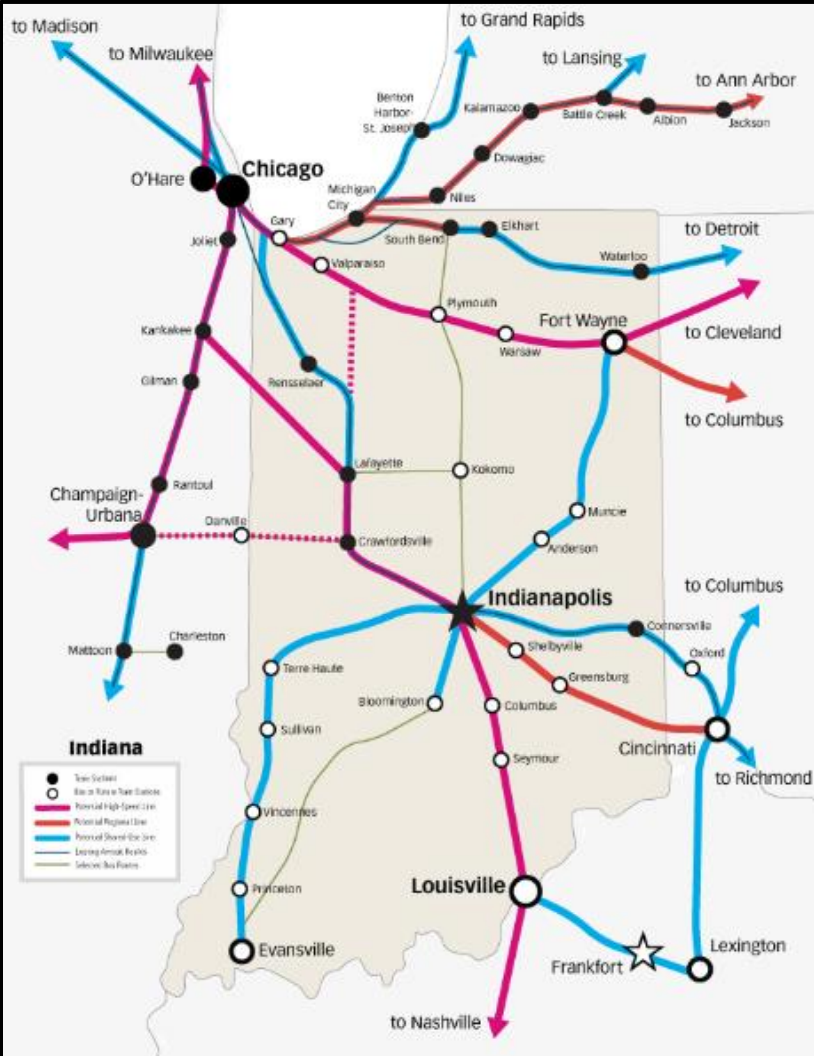
Amtrak’s Legal Right to Preference was reviewed along with references to the related federal laws, which simply need to be enforced. Last year’s Host Railroad Report Card was then presented. A railroad bottleneck has existed in Northwest Indiana for a very long time. The Midwest Interstate Passenger Rail Commission (MIPRC) is involved in addressing this serious issue.
Of course, how we’re going to pay for the very large amount of money needed to improve our country’s railroad infrastructure is the elephant on the table. One option, the National Infrastructure Bank (NIB), has proven in history to get things done. The YouTube video “Brother, Can You Spare a Billion? The Story of Jesse H. Jones”, is hosted by Walter Cronkite and explains how we survived the first half of the 20th century. You won’t regret this history lesson.
Indiana will have a new Governor in 2025, Mike Braun. As listed here, his priorities, as well as President-elect Donald Trump’s, are not placing our country’s transportation infrastructure high enough in their to-do lists. It is our responsibility as advocates to influence the decision makers in our Statehouses and in Washington, DC. Frankly, we also need to impress on everyone the importance of having 21st century transportation options just as most other countries in the world have already done. CAPT members are welcome to email Mr. Bassler at tkbassler@gmail.com with questions or comments.
CSX PRESIDENT & CEO KEYNOTE SPEAKER AT ACL-SAL MEETING IN JACKSONVILLE, FL, FEBRUARY 6-9, 2025
The February 6-9 th annual meeting of the Atlantic Coast Line and Seaboard Air Line Railroads Historical Society will feature Joseph R. Hinrichs, president and chief executive officer of CSX Transportation. Mr. Hinrichs, who has served CSX since September 2022, is the keynote speaker at ACT-SAL’s traditional Saturday night banquet. The four-day event is scheduled for the Crowne Plaza Airport Hotel in Jacksonville, FL.
There will be up to 11 member presentations on Thursday and Friday. The ACL and SAL Historical Society Store will be open Thursday night, Friday, and at the train show on Saturday. A modeling display is planned. Registration is required by February 1 and can be done online at www.aclsal.org. Go to info@aclsal.org for more information.
RAIL PASSENGERS ASSOCIATION (RPA) CHANGING SPRING ADVOCACY EVENT IN WASHINGTON, D.C.
(By Jim Mathews, President and CEO, Rail Passengers Association) A lot of emails have come my way asking about dates for the Spring Council meeting in Washington, D.C., and my short answer is probably sometime in late April, but we’re still working on a venue. That’s because our multi-year contract with the Alexandria hotel property across the street from the King Street Metro is finished, and that’s a good opening for us to look for ways to respond to some of the concerns many members have shared with us about everything from the location to the costs to participate.
The bottom line is that there will be a Spring Council Business Meeting, and if you’re looking to block out dates I’d block out the last week of April to attend 11 because that’s when Congress will return to Washington. However, I would not -- just yet -- make nonrefundable bookings, either for travel or places to stay.
But as all of you reading this know, we have a new House, a new Senate, and a new Administration coming to town next month. Our advocacy will take on new urgency, and our strategy for telling the story of passenger rail and how it can bring prosperity to every corner of our country is going to have to adjust. That’s why we’ve decided to dramatically expand the idea of Day on the Hill, hosting two weeks’ worth of workshops for our members, donors, and supporters at our DC offices and conducting four separate rounds of visits with congressional delegations over that two-week span.
These workshops and their Hill visits will take place during the last week of March and the first week of April and will be centered on specific regions of the country so that issues of local concern will get the attention they truly deserve. We can’t afford to wait until April to make our first appearance on Capitol Hill, and we can’t just rely on Council members alone to carry our grassroots messages to members of Congress – including the 60 or so new legislators who will take their seats for the first time.
So, our plan for 2025 is to have a Spring Council meeting in D.C., likely in the fourth week of April, a Fall Council meeting somewhere else in the country chosen and produced by the Council, and to supplement these meetings with two solid weeks of intensive workshops and Hill visits. Those workshops are going to be an important kick-off to our new advocacy strategy, and we’re opening registration now to get started. I hope I can count on you to take part. When I arrived as CEO a decade ago, the Day-On-The-Hill visits had evolved into a Council-only activity, but they were never intended to be exclusively a Council activity. Through habit and convention, that's what they had become, and it’s something I have really tried to change during the past ten years. These workshops are for anyone who really wants to do Day-On-The-Hill and do it right, whether you’re an elected Council member, or a rank-and-file member, or even a nonmember who supports us and passenger rail. During an intensive two-day session, you’ll learn from our team, do deep dives into local/regional issues with other members from your region, and then do visits with your congressional members that are focused and targeted on issues closest to you.
We think they're going to be much more serious, thoughtful, and effective meetings than what we've done up to now. And by conducting multiple workshops and multiple rounds of Hill visits, we hope to demonstrate a much bigger and more sustained presence by our grassroots in the halls of Congress...just being visible, and present more often, will really resonate among congressional staffs.
Here are the dates for the workshops, by region:
March 24th & 25th = Northeast and Mid-Atlantic
March 26th & 27th = Southeast, Southern and South Central
March 31st & April 1st = Midwest
April 2nd & April 3rd = Northwest, Southwest and Mountains/Plains
Obviously, anyone is free to attend any of the two-day workshops, each of which will include a Hill visit, but we’ve designed it so that each region gets its own focused day (either Monday or Wednesday) and its own set of congressional appointments (either Tuesday or Thursday). Which days would depend on which region you would choose for your participation.
Between our office’s workshop space and the conference center in our building, we can absorb as many as 50 attendees for each session, but we will have to cap attendance at 50 per regional session. Registration costs will be significantly lower than prior years because there’s no hotel food-and-beverage minimum or conference space rental for us to cover, and if a traditional hotel – with its traditional costs – is tough to fit in your budget, you’ll have the freedom to make your own arrangements in a way that suits you best.
“So, what does this mean for the Spring Council meeting, Jim?” One of the biggest concerns I’ve heard from Council members is that there isn’t enough time to build relationships with Council colleagues, to debate and discuss customer-service and policy issues, and to conduct Council business. And I’ve also observed – and our meeting records confirm this – that many Council members aren’t making Hill visits at all when they travel to D.C. for the Spring meeting
With this step, I’m trying to give more time back to the Council for its own business, and by decoupling the Council meeting and the Hill visits, we’ll create more space for Council business to take place, devoting an entire day to Council debate, discussion, and speakers rather than just a few hours shoehorned into the last morning of the conference.
Yes, you’re reading that correctly: Council business will take place for a full eight-hour day, in person. Council members are smart, engaged, and knowledgeable, and they want and deserve more time together and more space to engage with the rail policy questions we all want to address. Once we finalize a venue, Council will be the first to know so that you can make plans. My hope is that those plans will cost Council members less because they’ll be able to choose their own hotels or Airbnb arrangements, and in any case a one-day meeting will demand fewer overnights than the traditional three- or four-day meeting.
At the same time, as has been our practice since the pandemic, Council members will also have the option to participate in the Business Meeting and fulfill their Council responsibilities via Zoom at no cost.
Among many members the impression (always incorrect, but impossible to kill) has always been that Hill visits were only for Council members, and that the meetings themselves were only a Council function. Now they're two entirely different events. Come to one, come to the other, or come to both. You can choose how to attend, where to stay, and how to participate.
I’ve been saying for several years now that our strength is in our grassroots voices, and I’ve heard from many of you that you want to find better and more meaningful ways to get involved and in ways that you can afford. We think these workshops will help to do that, while turbocharging our presence on Capitol Hill at a crucial time to defend all the gains we have made in the past six years. This is no time to stay on the sidelines, and I hope to see you at one of our workshops in D.C.
PHOTOS OF NORFOLK SOUTHERN’S RAIL LINE DESTRUCTION IN WESTERN NORTH CAROLINA CAUSED BY HURRICANE HELENE
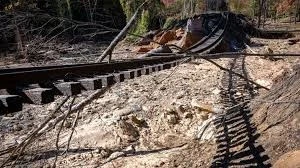
Photos taken and provided by NC VP Tommy Thomas, November 20, 2024
STAY INFORMED
Follow the latest passenger rail updates across the Carolinas.
Stay informed, support our advocacy, and help keep these issues on the agenda across North and South Carolina.